
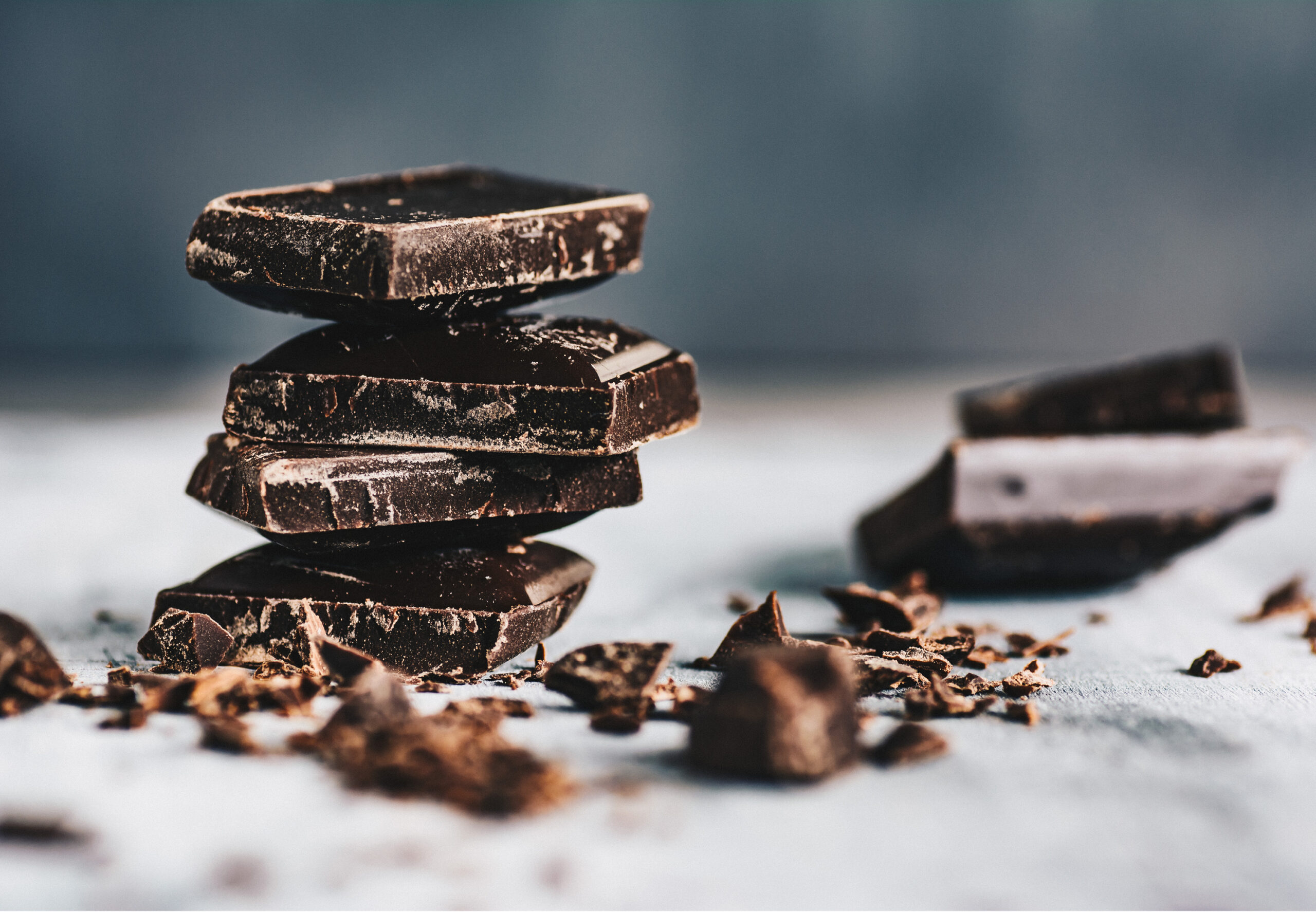
The Ultimate Guide to Dark Chocolate
Intense and noble, dark chocolate has crossed eras without ever losing its charm. With every tasting, it opens the door to new sensations—another nuance, another intensity, another emotion. Its aromatic richness and complexity make it a timeless pleasure, carried by the constant promise of discovery. What are you looking for in your next square of dark chocolate? Let’s begin the journey!
What is dark chocolate?
Dark chocolate stands out for its high cocoa content, which gives it an intense aromatic profile and a delicate bitterness that balances the chocolate’s natural sweetness. Darker than milk or white chocolate, it also has a firmer texture — a direct reflection of its cocoa richness.
History: Did you know?
Solid dark chocolate, as we know it today, appeared long after cacao first arrived in Europe in the 16th century. Between the 18th and 19th centuries, advances in grinding, pressing, and conching made it possible to create the first modern chocolate bars. In 1847, Joseph Fry marked a turning point by producing the very first solid bar, made from cocoa paste, melted cocoa butter, and sugar. Around the same time, John Cadbury helped industrialize and popularize these new techniques. This is how the modern era of dark chocolate began.
Composition and Ingredients
Dark chocolate is made from a short list of ingredients, yet it can create an impressively rich aromatic palette:
- Cocoa mass: also known as cocoa liquor or chocolate liquor, it comes from grinding roasted and shelled cocoa beans. As the core ingredient of dark chocolate, it’s one of the best indicators of quality.
- Cocoa butter: this natural fat, extracted from ground cocoa beans, gives chocolate its smooth and creamy texture. Together with cocoa mass, it forms the very foundation of dark chocolate.
- Sugar and vanilla: used sparingly, they soften the cocoa’s bitterness and help sweeten and enhance the flavour.
Cocoa Percentages: How to Understand Them
The cocoa percentage listed on a label refers to the total proportion of ingredients derived directly from the cocoa bean, such as cocoa solids and cocoa butter. To be considered dark chocolate, a product must contain at least 43% cocoa, though this percentage can reach as high as 100%. The higher the percentage, the more intense, bitter, and aromatically rich the chocolate becomes—while also being less sweet.
Conversely, some chocolates—especially milk chocolate and white chocolate—are made using only cocoa butter, without any cocoa solids. This gives them a milder, creamier, more dairy‑forward flavour. In these chocolates, the taste profile depends more on the milk and sugar than on the cocoa content. This is why many purists consider dark chocolate to be the only “true” chocolate.
Which country makes the best dark chocolate?
Tanzania — Thanks to its tropical climate, Tanzania grows particularly robust cocoa beans. These beans are used to craft exceptional dark chocolate, often exceeding 75% cocoa. Intense and aromatic, Tanzanian chocolate pairs beautifully with a smoky black tea or a Colombian coffee. Its depth also makes it an excellent choice for ganaches and for desserts featuring raspberry or pineapple.
European Preferences
The Swiss, masters of milk chocolate, remain loyal to its velvety sweetness.
The French, on the other hand, tend to favour dark chocolate, prized for its high cocoa content and deep, complex aromas.
Gourmet Pairings: Cheese, Wine, and Spirits
Dark chocolate pairs surprisingly well with several cheeses, thanks to its aromatic intensity, delicate bitterness, and rich cocoa profile. Two combinations stand out in particular: Parmesan, whose salty, umami character deepens the cocoa’s complexity, and Brie, whose subtle hazelnut notes complement the bitterness and roasted aromas of dark chocolate. Each pairing offers a unique sensory experience.
Dark chocolate also shines alongside a dry, tannic red wine with good structure—such as a Carignan from Languedoc‑Roussillon—whose power and slight acidity highlight the chocolate’s intensity. A lightly peated whisky elevates chocolates with very high cocoa content, while a port creates a particularly memorable pairing for chocolates above 75%. Beer and amber rum can also lead to combinations that are as surprising as they are delicious.
The Main Benefits of Dark Chocolate
Dark chocolate is associated with many positive health effects. Some have even been supported by scientific research. Here are the key benefits linked to cocoa:
- Supports heart health
- Helps lower blood pressure
- Provides a wealth of essential minerals
- Offers powerful antioxidant effects
- Stimulates cognitive functions
- Helps protect against age‑related cognitive decline
- Reduces stress and anxiety
- Improves sleep quality
- Enhances athletic performance
- Offers benefits during pregnancy
What are you looking for in your next square of dark chocolate?
Dark chocolate captivates with its depth, its rich cocoa character, and the diversity of its pairings. Timeless and bold, it reveals a thousand nuances with every tasting. So tell me—what cocoa profile, what intensity, and what aromatic depth do you want to explore in your next dark‑chocolate experience?