
Madeleine: Origins and Traditions
“I lifted to my lips a spoonful of the tea in which I had soaked a morsel of madeleine. But at the very moment when the sip mixed with the crumbs of the cake touched my palate, I shuddered, attentive to the extraordinary thing that was happening inside me.” — Marcel Proust
The madeleine… its very name evokes tender sweetness, the scent of warm butter, a memory rising gently to the surface. This little pastry — a simple French classic — may look unassuming, but it hides a remarkable power: with a single bite, it can transport us back to simple, happy moments. A childhood snack, a kitchen scented with lemon, a quiet Sunday.
A symbol of conviviality, the madeleine evokes both the pleasure of dipping it into a warm drink and the joy of lingering in conversation. In short, it’s a sensory journey wrapped in a cloud of memories and literary imagery. Let’s go a little further.
What is a Madeleine?
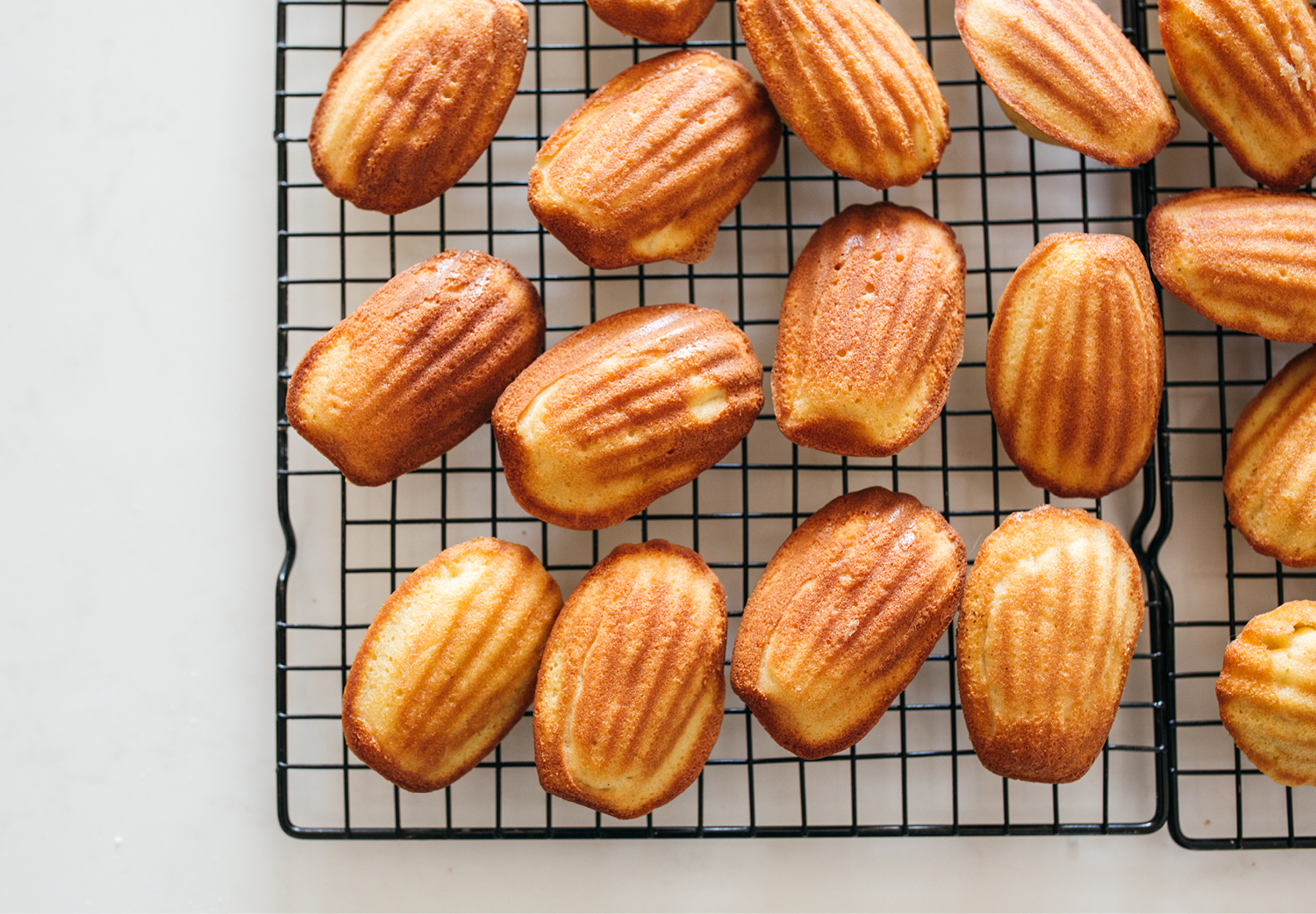
A madeleine is a small traditional cake shaped like a seashell, thanks to moulds with distinctive ridges. Made with a génoise-style batter, it offers a light texture reminiscent of sponge cake. Classic recipes sometimes include finely ground almonds, while others rely on lemon zest for a brighter touch. The ingredients remain traditional: eggs, sugar, flour, butter, and a hint of lemon or vanilla.
How to Enjoy a Madeleine
The madeleine is a versatile little treat. You can enjoy it:
- Dipped in hot tea — the essential Proustian gesture.
- At breakfast with coffee, for a simple and comforting ritual.
- Dipped in a bowl of hot chocolate for pure decadence.
- With a glass of milk, to awaken your inner child.
- As a dessert, with raspberry coulis or a drizzle of honey.
- In a revisited version, such as a tiramisu made with madeleines.
- As a snack, slipped into a lunch bag to brighten the day.
Origin of the Madeleine
The story of the madeleine begins in Commercy, a town in the Lorraine region of France. According to legend, it owes its name to Madeleine Paulmier, a young cook from the area. In 1755, she is said to have saved a reception hosted by Duke Stanislas Leszczyński by preparing a small cake based on her grandmother’s recipe, after a dispute between the steward and the chef. The improvised dessert delighted the guests, and the duke, charmed, gave the cake the young servant’s name. Since then, the madeleine has become an iconic pastry.
However, historian Charles Sadoul attributes the recipe to a cook working for Cardinal de Retz a century earlier. In any case, the existence of madeleines is documented as early as 1815.
Proust’s Madeleine
But it was Marcel Proust who truly elevated the madeleine to iconic status. In a famous scene from In Search of Lost Time, a simple bite of a madeleine dipped in tea triggers in the narrator a wave of memories — not a conscious recollection, but the vivid, almost miraculous sensation of reliving a moment from childhood.
Since then, “Proust’s madeleine” has become a universal metaphor for memory, nostalgia… and a certain literary indulgence. In essence, the term refers to any trigger that evokes a feeling of reminiscence — a vague, emotionally charged impression of remembering.
Did You Know?
- The madeleine is so famous that it inspired a psychological concept: the “madeleine effect,” meaning involuntary memory triggered by taste or smell.
- In France, madeleines are common at children’s snack time or during workplace coffee breaks.
- Madeleines are also found in Spain, where they likely arrived with French pilgrims on the Camino de Santiago.
- Giant moulds exist for baking a “mega‑madeleine” to share — or not.
- Some French bakeries offer salty, savoury madeleines: cheese, olives, herbs… perfect as appetizers.
- Purists still debate: lemon or vanilla?
- Great Britain has its own version of the dessert: fluffy vanilla sponge coated in cherry jam, desiccated coconut and a cherry on top!
A Sweetness that Stands the Test of Time
The madeleine is a small joy that has crossed centuries without losing its charm. A humble pastry, yet rich in emotion. A symbol of sweetness, memory, and sharing. Whether enjoyed in silence, offered with affection, or savoured on the sly, it reminds us that the simplest pleasures are often the most precious.
At heart, the madeleine remains what it has always been: a small, deeply French cake capable of bringing back gentle memories the moment it’s dipped into a warm drink. Proust made it a literary symbol, but its power lies above all in what it awakens within us: a moment of calm, a childhood scent, a comforting pause in the midst of daily life.