
Radishes: More Than Just a Root Vegetable
“The radish is a symbol of our common roots.” — Ar Furlukin
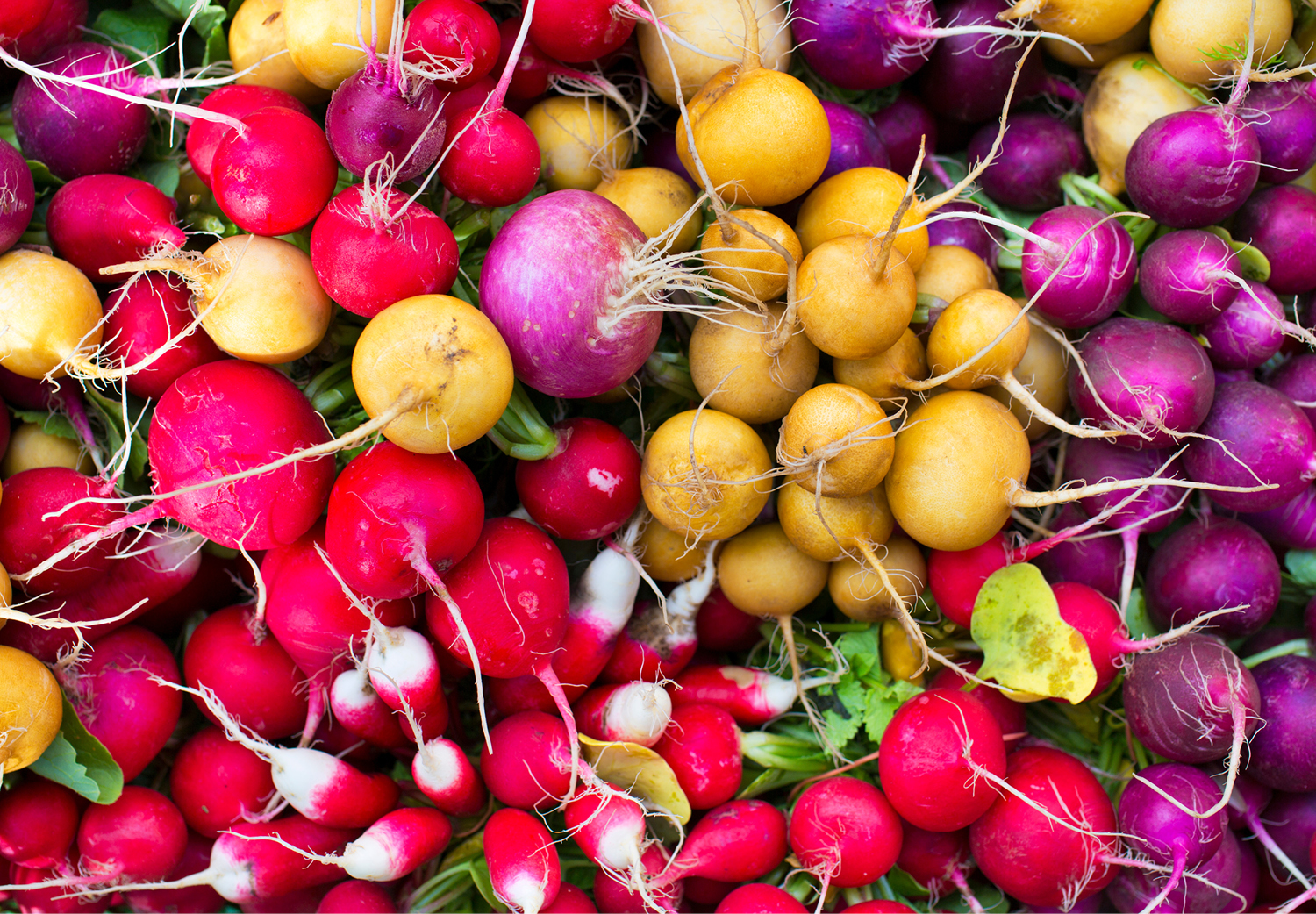
Crisp in a salad, surprising in a soup, or blended into a pesto, radishes find their place everywhere. This small root vegetable, with its vibrant colours — red, pink, white, purple, black — and delicate bite, can be enjoyed both raw and cooked. Delicious grilled on the BBQ, it becomes sweeter and lightly caramelized. It also shines in a fresh sauce or salsa. Low in carbs, it’s perfect for keto diets. In spring, it brings color, brightness, and texture to countless dishes. Ready to explore its varieties, uses, and benefits? Here’s what you need to know.
What Is a Radish?
The radish is a crisp, slightly peppery root vegetable appreciated for its freshness and wide range of shapes. Cultivated for thousands of years, it belongs to the Brassicaceae family and can be eaten raw, cooked, pickled, or marinated. Whether round, elongated, white, pink, or black, it adds a bright, lively touch to spring dishes.
A Bit of History
Among the oldest cultivated vegetables, the radish likely originated in the Near East or Southwest Asia. It was already consumed in Egypt more than 5,000 years ago, sometimes for its seeds used to produce oil. The Greeks and Romans grew several varieties, and it became widespread in Northern Europe during the Middle Ages.
The small red radish we know today appeared only in the 18th century; before that, larger white or black radishes were more common. Introduced early in the Americas, it was widely cultivated there. In Canada, British Columbia, Ontario, and Quebec are now the main producers.
Radish Profile
- Family: Brassicaceae
- Origin: Asia Minor or the Near East / Southwest Asia
- Season: March to June
- Colours: Pink, white, purple, black
- Flavour: Mild to peppery
Nutritional Characteristics
- Very low in calories
- Antioxidant properties
- Satiating effect
- Source of dietary fibre
Radish Varieties
Radishes come in a wide range of shapes, colours, and flavours. Some of the best‑known varieties include:
- Round red radish — the most popular variety in Quebec, crisp and slightly peppery
- Pink radish with white tip – crisp, mild, slightly peppery
- Black round radish – dark skin, white flesh, stronger flavour
- Chinese pink radish – elongated, juicy, mild
- White daikon – long, firm, very mild, great raw or cooked
- Watermelon radish (red meat) – green skin, bright pink center, sweet‑peppery taste
- Malaga purple – deep violet color, firm texture
- Zlata yellow – small golden radish, mild flavour
- Red dragon – elongated, red skin, white flesh
- Violet de Gournay – heirloom variety with a bold flavour
Each variety offers its own texture, aromatic intensity, and culinary uses, making radishes a playground of flavours.
Storage
Radishes keep best in the refrigerator. Unwashed and stored loosely, small radishes last about a week; larger varieties keep a few days longer. Once washed, the greens should be cooked quickly. If your radishes have lost their firmness, soak them in cold water and refrigerate for one to two hours before preparing.
Pairings
To create a pleasant contrast, pair the radish’s peppery bite with the freshness of cucumber, cilantro, lettuce, or mint. It also pairs beautifully with salty elements such as miso, soy sauce, or seafood like crab and shrimp. Creamy ingredients — avocado, cheese, eggs — are also good pairings. Raw, roasted, sautéed, or marinated, the radish adapts to every cuisine.
Health Benefits
Low in calories yet rich in nutrients, radishes provide vitamin C, fiber, and potassium. Their sulfur compounds, responsible for their peppery flavour, are studied for their antioxidant properties. Radishes promote satiety, support digestion, and help maintain fluid balance thanks to their potassium content. Simple, nutritious, and versatile, they deserve a place in everyday meals.
Conclusion
Colourful, versatile, and steeped in history, the radish is far more than a simple root vegetable. Its many varieties, contrasting flavours, and nutritional qualities make it a modern and inspiring ingredient. Raw, cooked, or marinated, it brings freshness and character to any dish. Rediscovering the radish means opening the door to endless pairings, textures, and recipe ideas.