
Complete Guide to Strawberries
Strawberries: a Symbol of Summer… and So Much More
It’s hard to resist a strawberry. Bright red, fragrant, and juicy, it evokes summer, sun‑drenched fields, and memories of berry picking. But behind its apparent simplicity lies a fascinating fruit. Surprising botany, local history, mythology, and pop culture… the strawberry fully deserves its place among Quebec’s most beloved ingredients.
History of the Strawberry: From Medicinal Plant to St. Lawrence Fields
The earliest traces of wild strawberry consumption date back to prehistoric times: seeds found in Europe indicate that humans ate them long ago. For centuries, wild strawberries were mainly used in traditional medicine:
- boiled leaves were used for infusions or poultices,
- the fruit was recommended to soothe “redness and heat in the face.”
In 1534, Jacques Cartier noted the abundance of wild strawberries near the St. Lawrence River. Organized strawberry cultivation developed in Europe in the 16th and 17th centuries, then expanded in the 18th century with the emergence of the modern strawberry, a cross between Fragaria virginiana and Fragaria chiloensis. Cultivation reached North America before 1800. Since then, strawberries have held a cherished place in Quebec’s culinary landscape.
Mythology and Symbolism
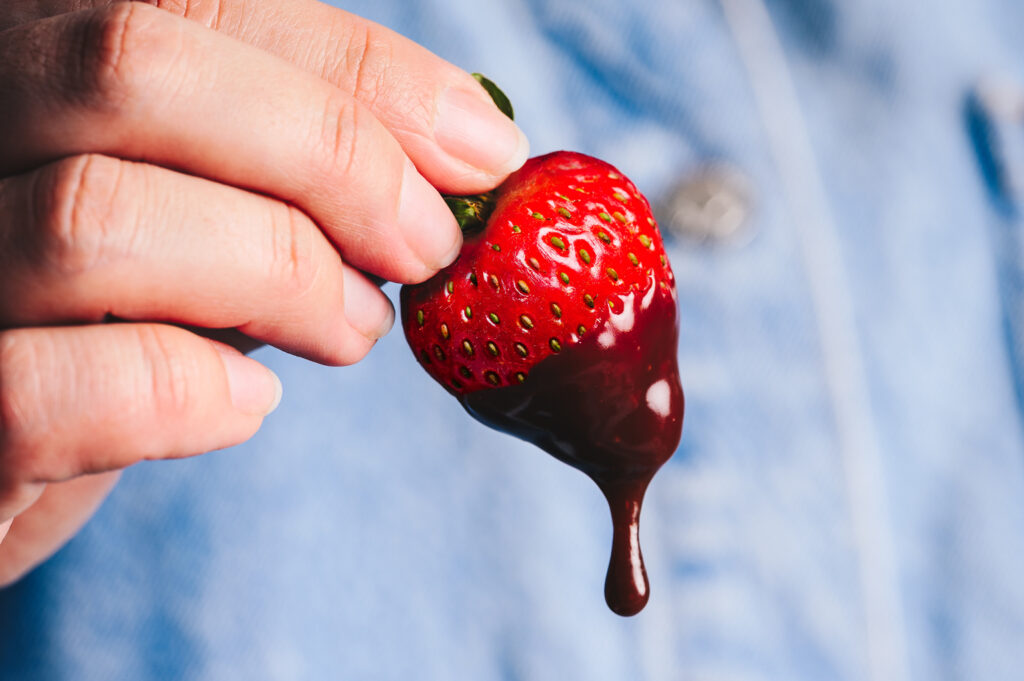
In Roman mythology, strawberries are sometimes associated with Venus because of their red colour and heart‑like shape. In certain Indigenous traditions of North America, they are linked to ideas of harmony or reconciliation. In Europe, strawberries have been used over time as symbols of sweetness, abundance, or purity in various cultural contexts. No wonder, then, that the strawberry — a fruit that naturally embodies sweetness, pleasure, and indulgence — has become the symbol of our “chocolate fondue” offering within the Chic! Fondue range.
Strawberries in Pop Culture
It’s hard not to think of Strawberry Fields Forever, the iconic Beatles song. Strawberries also inspire fashion, fragrances, illustrations, and popular expressions. They evoke summer, nostalgia, and a universal sense of sweetness.
What Exactly Is a Strawberry?
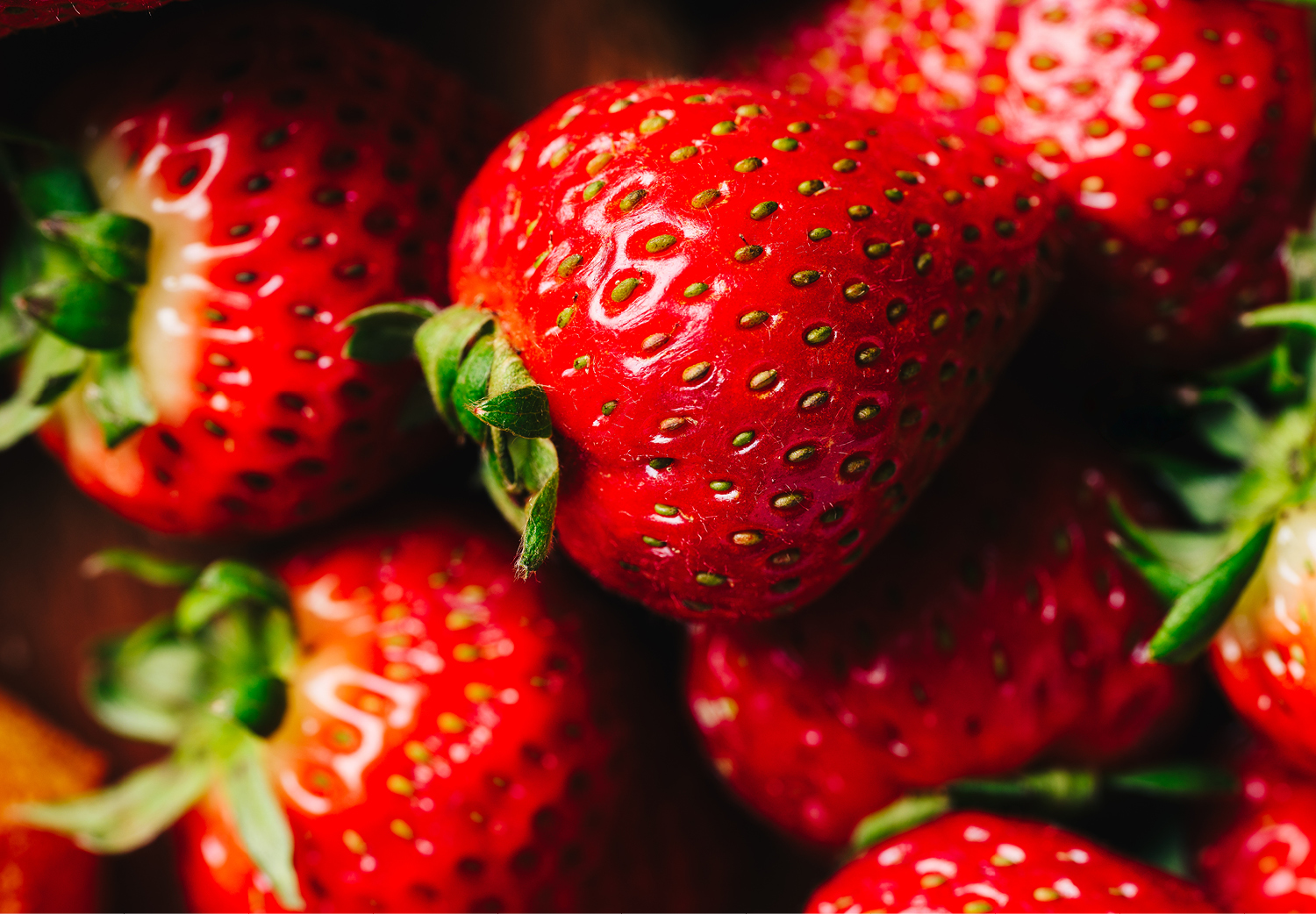
Surprise: the strawberry is not a fruit in the botanical sense. It’s a false fruit: the red, fleshy part is an enlarged floral receptacle. The true fruits are the achenes—the tiny yellow dots on its surface. In everyday language, however, strawberries are grouped with red fruits.
Nutritional Value and Benefits
Strawberries are surprisingly nutritious for such a small fruit. Per 100 g, they provide:
- vitamin C levels comparable to an orange,
- various antioxidants, including anthocyanins responsible for their red colour,
- dietary fibre,
- low calories.
The antioxidants in strawberries are studied for their potential role in reducing oxidative stress. Without making medical claims, we can say that strawberries are both delicious and nutritious.
Quebec Strawberries: a Pleasure Now Available Year‑Round
Long associated with summer, Quebec strawberries are now available year‑round thanks to greenhouse production, even though most of the harvest remains seasonal. Quebec stands out for:
- varieties adapted to northern climates,
- local production focused on freshness,
- farming practices that prioritize aromatic quality.
The result: flavourful strawberries grown close to home—even in the heart of winter.
Ontario Strawberries
Ontario also grows a wide variety of strawberries, often from day‑neutral cultivars or lines selected for firmness, transportability, and aromatic profile. Depending on the variety, season, and climate, strawberry size varies. This simply reflects the type of strawberry grown and the growing conditions. Each region develops its own flavour character.
Understanding Strawberry Flavour
A strawberry’s taste depends on the balance between sugar, acidity, phenolic compounds, and aroma. Ripeness, variety, and growing conditions strongly influence flavour. Local strawberries picked at full maturity are often more flavourful than those harvested early for transport.
Storage Tip
Avoid washing strawberries before eating them, and store them in the refrigerator, ideally in a ventilated container. Delicate by nature, they’re best enjoyed quickly.
Key Takeaway
Whether wild, Quebec‑grown, or Ontario‑grown, strawberries tell the story of a place and a season. A false fruit but a true delight, they charm with their aroma, freshness, and cultural richness. Simple or refined, they remind us that the most memorable flavours often come from the simplest things… like love.