
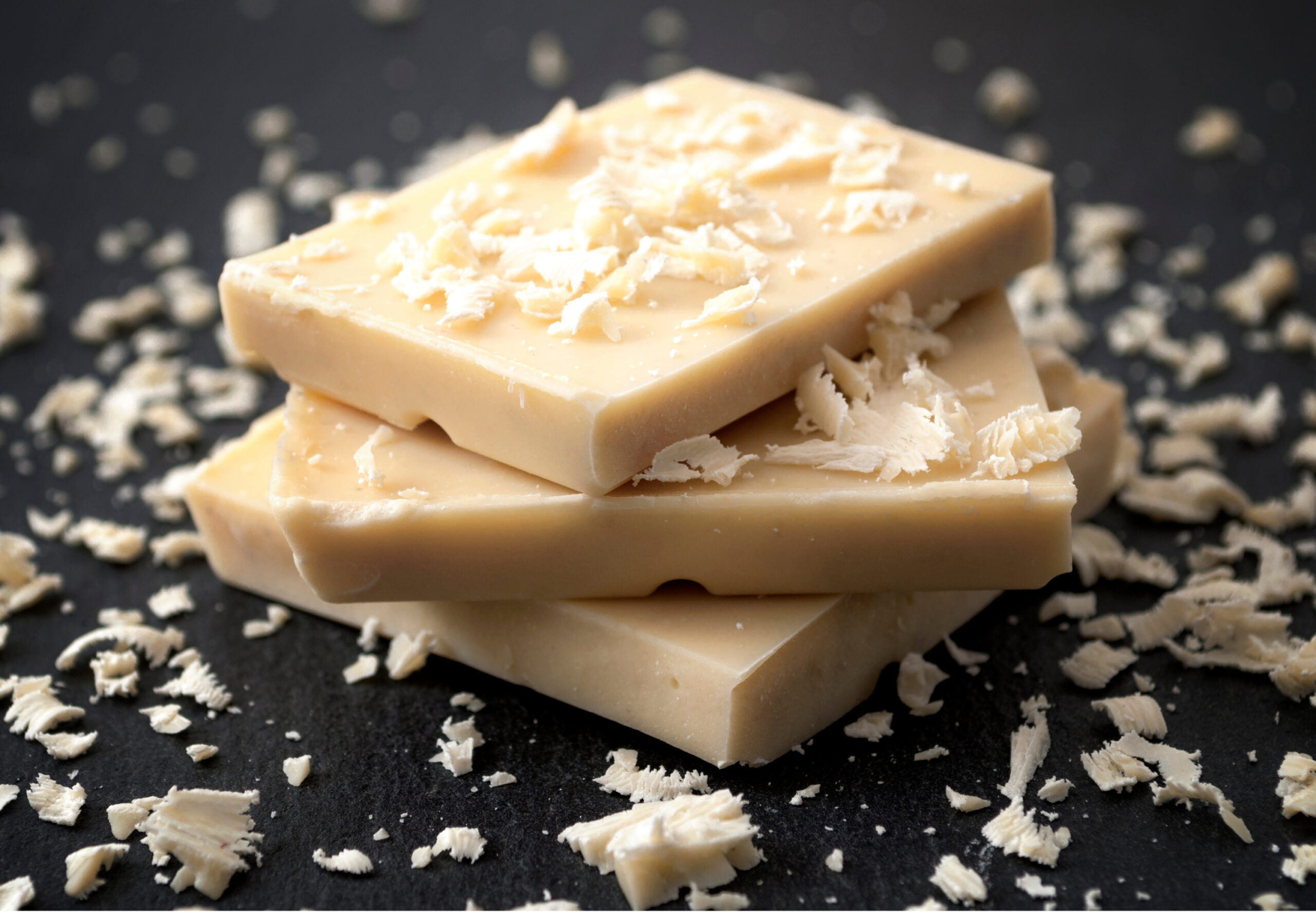
The Ultimate Guide to White Chocolate
Long seen as the “little sibling” of the chocolate family, white chocolate actually hides a fascinating history, a unique composition, and an irresistible charm that never leaves anyone indifferent. Sweet, creamy, comforting… and sometimes controversial, it truly deserves a closer look to understand what makes it so distinctive. Where does this silky sweetness come from? How is it made? Let’s explore the origins of white chocolate and uncover why it continues to delight so many taste buds. Let’s begin the journey!
What Is White Chocolate?
A delicate blend of cocoa butter, sugar, and milk, white chocolate captivates with its sweet, comforting flavour. Less bitter than dark chocolate and more surprising than milk chocolate, it’s especially loved by children for its round, generous taste.
Smooth and creamy, its luxurious texture comes from the precise balance of cocoa butter and dairy ingredients. Its defining trait? The complete absence of cocoa solids — which gives it its pale ivory colour and an intensely soft, enveloping flavour profile.
A Brief History
White chocolate first emerged in Switzerland in 1930, when Nestlé looked for a way to use its surplus cocoa butter — a product that had previously been used mainly in pharmacies to make… suppositories.
Ten years later, the company incorporated this cocoa butter into new confectionery products and introduced them to the U.S. market, where they became an instant success. Nestlé continued producing white chocolate bars and tablets, eventually launching the Galak brand in 1967, a line entirely dedicated to white chocolate.
Composition and Ingredients
White chocolate stands out for its unique composition: unlike dark or milk chocolate, it contains no cocoa mass. It is made primarily from cocoa butter, sugar, and milk — a combination that gives it its creamy texture and delicately sweet flavour.
Proportions vary from one manufacturer to another, directly influencing both quality and taste. Natural vanilla is often added, especially since cocoa butter is typically deodorized; as a result, the aromas of white chocolate come mainly from the milk and vanilla.
In the European Union and Switzerland, the term “white chocolate” is strictly regulated: at least 20% cocoa butter and 14% milk.
*Nutritionally, white chocolate is low in cholesterol and very low in sodium, but high in sugar and saturated fats.
Is White Chocolate Really Chocolate?
The debate is far from settled. For some purists, the answer is no: without cocoa solids, white chocolate shouldn’t qualify as chocolate at all. Others counter that the presence of cocoa butter — one of chocolate’s essential components — is enough to place it firmly within the family. Opinions may differ, but one thing is certain: white chocolate has carved out a special place in the hearts of chocolate lovers everywhere.
Pairing and Tasting
Pastry chefs value white chocolate for its natural sweetness, which pairs beautifully with salty, tangy, or even bitter ingredients. Its subtle spicy, floral, or woody notes also create striking contrasts. Here are a few inspiring pairings:
- Fruits: red berries — tart strawberries, raspberries — bring a vibrant, refreshing contrast to its sweetness.
- Chopped nuts: salted pistachios, pecans, or walnuts add crunch and richness while balancing the sugar.
- Coffee and liqueurs: a hot espresso or lightly sweetened iced coffee creates an irresistible contrast, with the bitterness cutting through the roundness of white chocolate.
- Pastries and creams: ideal in cheesecake, panna cotta, vanilla whipped ganache, whipped cream, or a light mousse.
* Enjoyed on its own, white chocolate remains a delightful treat for those who prefer gentle, less intense flavors than dark chocolate.
Which Wine Pairs Best with White Chocolate?
With no tannins, white chocolate naturally pairs well with fresh, aromatic white wines. Alsace varietals or a Riesling from the Rhine Valley offer a delicate, refreshing, and indulgent match that highlights its creamy sweetness.
Is White Chocolate Bad for You?
High in sugar and lacking cocoa solids, white chocolate doesn’t provide the same nutritional benefits as other chocolates and isn’t ideal for people with diabetes, who may prefer dark chocolate at 70% or higher. Enjoyed in moderation, however, it remains a safe pleasure — and even brings a few culinary and nutritional advantages to the table.
And you — how do you prefer to enjoy white chocolate?
Whether you love it in a silky ganache, a chocolate fondue, a crunchy bar, or a simple square savoured slowly, white chocolate invites you to rediscover sweetness in its purest form. So go ahead: explore, taste, compare, and celebrate a simple, creamy, and endlessly comforting pleasure.