
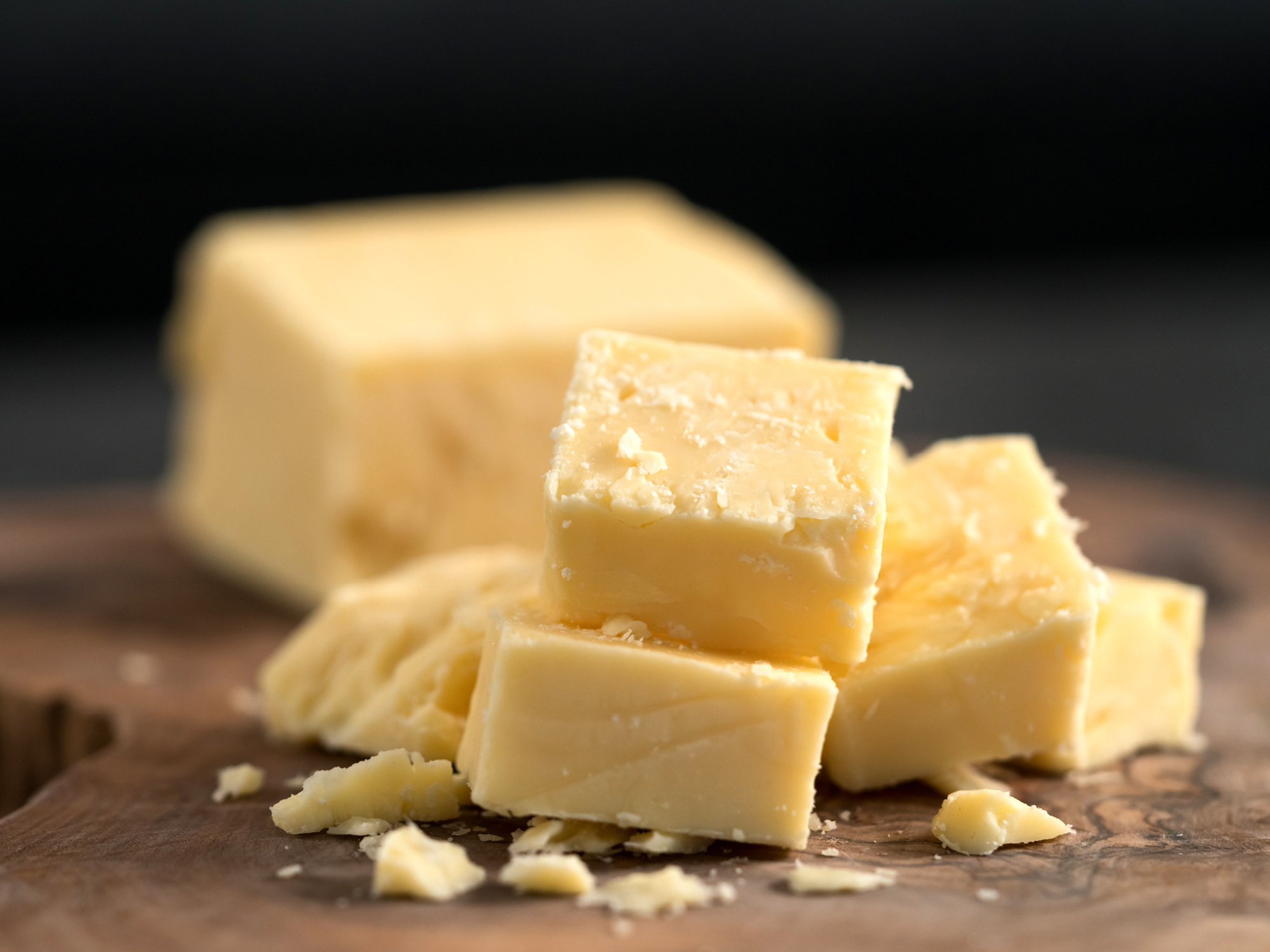
The History of Cheddar Cheese in Quebec
Table of Contents
- A Richer Story Than You’d Expect
- From English Origins to the Shores of the St. Lawrence
- The 19th Century: The Boom of Quebec Cheesemaking
- Saint‑Prime: The Village That Put Quebec Cheddar on the Map
- Poutine: When Young Cheddar Became a Star
- North America’s Distinctive Cheddar Signatures
- Celebrating Local Cheddar, Today and Tomorrow
A Richer Story Than You’d Expect
History of Cheddar Cheese in Quebec — When people think of Quebec cheese, they often picture squeaky cheese curds, steaming poutine, or the artisanal cheeses that fill the display cases of local fromageries. But long before cheese curds became a beloved icon, traditional cheddar had already begun shaping Quebec’s culinary landscape. And its story here is far more surprising than many realize.

Photo credit: Marie-Josée Marcotte pour Plaisirs Gourmets
From English Origins to the Shores of the St. Lawrence
Cheddar was born in the village of Cheddar, in Somerset, in southwest England, where wheels were once aged in natural caves whose cool, humid conditions provided the ideal environment for maturation. Robust, easy to transport, and long‑lasting, cheddar quickly became a staple of British food culture.
Its journey across the Atlantic to Quebec is closely tied to the British Conquest. After 1760, eating habits shifted, cheesemaking techniques evolved, and cheddar slowly found its place in the colony. The arrival of the Loyalists—colonists loyal to the British Crown—at the end of the 18th century accelerated this transformation. They brought their methods, their recipes, and a deep attachment to this emblematic cheese.
And what about the Irish? Without their significant presence in Quebec, the cheddar we know today would likely not hold the same place in our food culture.
The 19th Century: The Boom of Quebec Cheesemaking
By the mid‑19th century, Quebec had truly become a land of cheesemakers. More than 1,200 cheese factories operated across the province, and most of them produced cheddar—the dominant cheese in North America at the time.
Why such enthusiasm?
- Milk was plentiful in rural areas.
- Cheddar traveled well.
- It sold easily, both locally and abroad.
- And most importantly: people loved its taste.
Meanwhile, demand in Britain was skyrocketing. England consumed enormous quantities of cheddar and struggled to meet its own needs. With European imports limited by the Napoleonic blockade, the colonies became strategic suppliers. By the 1860s, the first commercial cheese factories opened in Quebec and Ontario—often one per village.
In 1885, the cheesemaking school of Saint‑Denis‑de‑la-Bouteillerie was founded to train skilled artisans. Around the same time, cheese curds made their first appearance. This fresh, youthful cheddar would soon change everything and permanently redefine Quebec’s cheese identity.
Saint‑Prime: The Village That Put Quebec Cheddar on the Map
No history of cheddar in Quebec would be complete without mentioning Saint‑Prime, in the Lac‑Saint‑Jean region. It was here that the Perron family founded a cheese factory in 1895—one that would become a true institution. Their aged cheddar quickly earned an enviable reputation and became a symbol of Quebec craftsmanship. The historic Perron Cheese Factory (Fromagerie Perron), one of the few surviving buildings from the 19th‑century cheesemaking boom, is now recognized as a major heritage site. It stands as a testament to the evolution of rural cheesemaking techniques.
Its importance is such — it is considered the oldest commercial cheese factory in Quebec — that it now houses the Museum of the Old Perron Cheese Factory, dedicated to the history of cheddar and traditional cheesemaking. It’s a unique place to dive into the province’s cheddar heritage—and a must‑visit for cheese lovers and food‑history enthusiasts alike.
Poutine: When Young Cheddar Became a Star
With the rise of micro‑cheesemakers, Quebec has developed an impressive array of fine cheeses that showcase artisanal skill and terroir. At the heart of this story lies cheddar. It’s from this very young cheddar—fresh, salted, and sold the same day—that the famous cheese curd was born. That irresistible little squeaky bite is simply cheddar before it’s aged.
By the 1960s—likely somewhere in the Bois‑Francs region—poutine catapulted cheese curds to national stardom. Their freshness and unique texture turned them into a symbol of Quebec—and now of Canada. Today, they remain one of the most iconic expressions of our cheesemaking tradition.

North America’s Distinctive Cheddar Signatures
Today, cheddar forms a vast North American landscape where each region leaves its mark. In the United States, several styles stand out: the bolder New York–style cheddar, the milder Colby/Longhorn, and the white cheddar often known as Vermont cheddar. Vermont has built an enviable reputation thanks to leading producers organized in cooperatives such as Cabot Creamery, whose impressive selection of aged cheddars (Seriously Sharp, Extra Sharp, Vintage Choice or Private Stock Cheddar Cheese) and flavoured cheddars (Horseradish, Habanero, Garlic & Herb, or Everything Bagel) has become a benchmark today.
In Canada, cheddar still holds a central place. Introduced in the 19th century to supply the British market, it quickly became part of everyday life. Today, Canadians still enjoy cheddars that are classified as mild, medium, or sharp depending on their aging. Mild cheddar comes in both “yellow” and “white” versions, while aged cheddars are generally white. Mild cheddar is aged for three months, medium cheddar for four to nine months, and strong cheddar (including strong and extra‑strong varieties) from nine months to several years.
Celebrating Local Cheddar, Today and Tomorrow
At the crossroads of tradition and innovation, cheddar continues to evolve—and Quebec plays a leading role. At 1001 Fondues, we proudly celebrate Quebec cheddar and, more broadly, the incredible cheeses produced across the province. Let’s keep savouring life’s simple pleasures—one cheddar at a time.