
Cheese fondue for the holidays with traditions and a full menu
Key takeaways: cheese fondue belongs to a long winter tradition, in Switzerland as in Quebec. For a complete holiday menu, plan a light starter, 150 to 200 g of cheese per person as a main course and a simple dessert. Ready-to-cook fondues cut the prep work down to just a few minutes.
Between the Christmas Eve réveillon and the family dinners that follow one another until New Year’s Day, the holiday season asks a lot of hosts. Many spend the evening in the kitchen while their guests enjoy themselves in the living room. That’s where cheese fondue becomes a real ally.
This meal solves much of that problem. The pot takes centre stage on the table, everyone dips at their own pace, and the host can finally sit down with the guests. This guide looks at the traditions that turned fondue into a festive meal, then suggests a complete menu, from appetizers to dessert.
Table of Contents
- Why cheese fondue shows up on the holiday menu
- A complete holiday menu built around cheese fondue
- Hosting for the holidays without the rush
- A holiday cheese fondue that wins everyone over
- FAQ
Why cheese fondue shows up on the holiday menu
In short: fondue season peaks at the end of the year in Switzerland, and fondue has been part of holiday meals in Quebec for decades.
In Switzerland, fondue reigns from September to December
Fondue remains the quintessential Swiss dish. According to Switzerland Tourism, about 65% of all fondue sales in the country take place between September and December, and roughly one household in two buys fondue. The end of the year is truly fondue pot season.
That popularity is no accident. In the 1930s, the Swiss Cheese Union promoted fondue as a national dish to boost cheese consumption. The habit of sharing a meal around a common pot stuck.
The best-known blend, moitié-moitié, combines equal parts Vacherin Fribourgeois AOP and Gruyère AOP. In Quebec, local cheesemakers make it possible to recreate that balance with firm and semi-firm local cheeses.
In Quebec, a holiday habit for decades
Fondue arrived in Quebec in the 1950s, notably at L’Aquarium, the restaurant of Swiss chef Gaston Perrin, whose legacy is traced in this history of Swiss fondue. It made its way into homes during the 1970s and 1980s, when a fondue pot was a common wedding gift.
To this day, Radio-Canada’s consumer show L’épicerie presents fondue chinoise as a Quebec holiday tradition (in French) that is enjoying renewed popularity. The cheese version, for its part, is especially well suited to intimate dinners and shared starters.
Fondue is also part of the atmosphere at some Christmas markets, such as the Québec City German Christmas Market, whose behind-the-scenes story is worth a read.
The religieuse, a ritual worth sharing
At the bottom of the pot, a golden cheese crust gradually forms: the religieuse. It’s lifted off with a wooden spoon while the burner is still lit, then shared at the end of the meal. An enamelled cast iron pot helps it form. The secrets of the religieuse are covered in a full article.
A complete holiday menu built around cheese fondue
In short: around a generous fondue, choose a light starter and a fresh dessert to keep the menu balanced.
A light appetizer to start
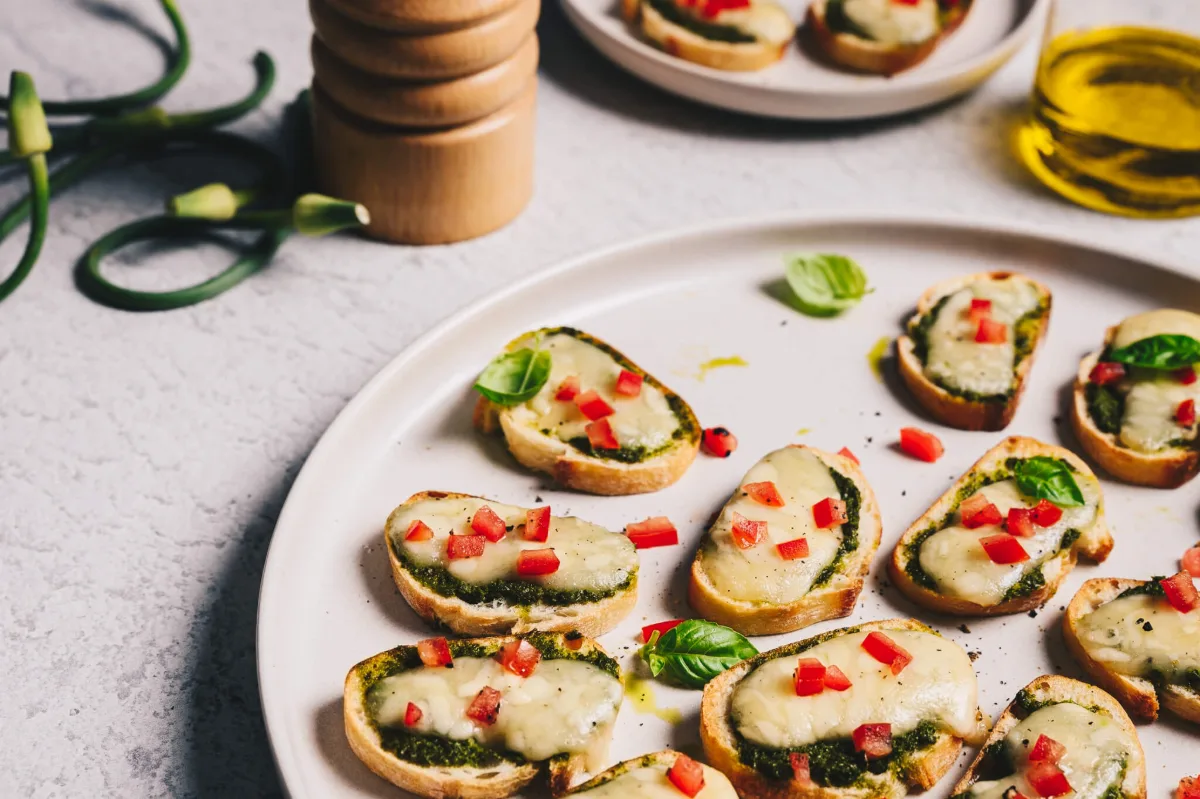
Cheese will be the star of the meal, so it’s best to keep the appetizer light. A starter that’s too filling spoils the appetite for the main course. Pickles and olives, which the Swiss often serve with fondue, are a good fit, along with a few raw vegetables. For a festive touch, these garlic scape pesto canapés come together quickly.
Fondue as the main course
For a main course, plan on 150 to 200 g of cheese per person. With a ready-to-cook fondue, one 350 g pouch serves two people as a meal, or four to six people as a starter.
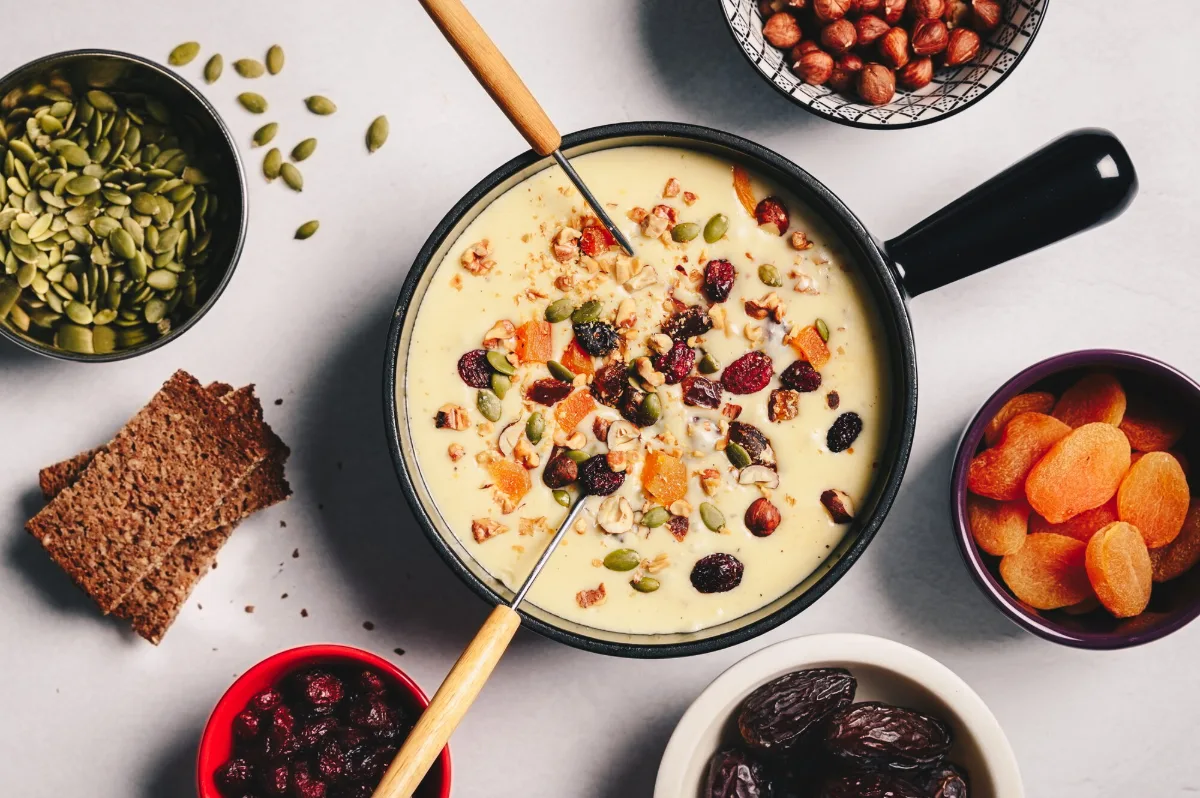
The fondue first cooks in a saucepan over medium heat, stirring until it turns creamy and comes to a boil. It is then transferred to a ceramic or enamelled cast iron fondue pot set over the burner. For a festive version, the celebration fondue recipe is topped with dried cranberries, apricots, pumpkin seeds and nuts.
For a main course with no prep, discover the ready-to-cook cheese fondues, made with local cheeses.
Local flavours to personalize the fondue
The holidays are a great time to move beyond the classic wine fondue. Chic! au cidre is made with sparkling rosé cider from Cidrerie Michel Jodoin, for mellow flavours. The Au Génépi fondue pairs Charlevoix cheeses with génépi from Distillerie Menaud, bringing herbal and floral notes. For a more boreal touch, the Du Guerrier fondue combines local cheeses with maple and dune pepper.
A fresh dessert to finish
After a rich main course, a light dessert is welcome. Switzerland Tourism suggests, for example, a sorbet or a fresh fruit salad. Those with a sweet tooth can opt for a small chocolate fondue served with fruit. In some regions of Switzerland, the meal even ends with double cream and meringues.
The table below sums up the menu, along with what can be prepared ahead.
| Course | Suggestion | Prep ahead | Guideline |
|---|---|---|---|
| Appetizer | Pickles, olives, canapés | Canapés assembled the same day | A few bites per person |
| Main course | Ready-to-cook or homemade fondue | Fondue bought or thawed the day before | 150 to 200 g of cheese per person |
| Sides | Bread, raw or blanched vegetables | Vegetables cut the day before | 200 to 250 g of bread per person if served alone |
| Dessert | Sorbet, fruit or chocolate fondue | Fruit washed the same day | Small portion |
| Drinks | Dry white wine, cider, apple juice | Bottles chilled | Always a non-alcoholic option |
Hosting for the holidays without the rush
In short: by planning purchases and setup a few days ahead, the host can enjoy the evening as much as the guests.
A few simple steps make the preparation lighter:
- Stock up early. Fresh fondues keep in the fridge until the date on the package and can also be frozen, so you can shop before the December rush.
- Cut vegetables the day before. Stored in closed containers, they stay fresh until the meal. Bread is best cut on the day itself.
- Set the table before guests arrive. The fondue pot, burner, fondue forks and plates will then be ready when it’s time to serve.
- Have a second burner on hand. Health Canada warns against refilling a fondue burner that is still hot, which can cause flame jetting. A spare burner means you don’t have to wait for it to cool.
- Keep a wooden spoon within reach. It’s used to stir the fondue and, at the end of the meal, to lift the religieuse.
- Think of guests who have trouble digesting lactose. The entire Chic! range is lactose-free, so everyone can share the same pot.
A holiday cheese fondue that wins everyone over
From an intimate réveillon to a big New Year’s dinner, cheese fondue adapts to the number of guests as well as to everyone’s tastes. A classic wine recipe will please the most people, while a beer or cider version will surprise the regulars. For a large table, two pots with different flavours are also a great conversation starter.
And to treat a fondue lover, a gift card slips easily under the tree.
FAQ
How much cheese fondue should you plan per person?
For cheese fondue served as a main course, plan on 150 to 200 g of cheese per person. Adjust based on your guests’ appetites and the number of sides. With a ready-to-cook fondue, one 350 g pouch serves two people as a meal, or four to six people as a starter. For eight guests as a main course, four pouches are usually enough, served with bread and vegetables.
Can you prepare a holiday fondue ahead of time?
The fondue itself is cooked at the last minute, but everything else can be prepared ahead. Ready-to-cook fondues are fresh, keep in the fridge until the date indicated on the package and can also be frozen. Vegetables can be cut the day before and the table set in the afternoon. When it’s time to eat, cooking then takes only a few minutes over medium heat, while stirring.
What wine goes with cheese fondue?
A dry, crisp white wine remains the classic pairing for this dish. In Switzerland, a Fendant, a dry white from the Valais region, is often served. In Quebec, a local dry white wine works very well too. For homemade fondue, the same wine works for cooking. For guests who don’t drink alcohol, Switzerland Tourism also mentions black tea and cold apple juice, which pair nicely with the cheese.