Cheese Fondues to Explore in Our Collection
The History of Cheese Fondue
The exact origin of cheese fondue, like that of our poutine, is sometimes debated. Like many mountain dishes, cheese fondue likely emerged in several places at once, on both sides of the border, from the same instinct: melting aged cheeses with white wine to use every last rind and make stale bread enjoyable during long winter months.
In Switzerland, the oldest known recipe appears in a Zurich publication from 1699 under a title that says it all: “To cook cheese with wine.” The regions of Valais, Fribourg and Vaud later elevated the blend of Gruyère, Vacherin and white wine into a gastronomic signature. In France, the word fondue appears as early as the 17th century in Le cuisinier françois, and the Savoie and Jura mountains developed their own versions using Beaufort, Comté and Tomme. Savoyard fondue is not a variation of Swiss fondue — it is a parallel tradition born in the mountains as well.
If the association between fondue and Switzerland is so enduring, it is because fondue was recognized there as a national dish as early as the 19th century, then promoted consistently throughout the 20th. The mountains, however, belong to both nations. For the full story — from the earliest written mentions to its arrival on the tables of Old Québec — explore the history of Swiss cheese fondue.
Fondue spread across Europe in the 20th century, then to North America, where it enjoyed remarkable popularity in the 1970s and 1980s. In Québec, it became part of everyday culture and a staple of shared meals in every season. Local expertise was first built on Swiss foundations: Swiss cheeses and numerous stays abroad served as our training ground before fondue reinvented itself with Canadian-made cheeses. More than 40 years of Québec expertise now carry this tradition forward.
Which Cheeses Should You Choose for a Cheese Fondue?
For a smooth, flavourful and stable fondue, choose aged firm or semi-firm cheeses in the style of Gruyère or Vacherin, as well as their French equivalents such as Comté, Beaufort or Tomme — or Québec cheeses like Hercule, Louis D’Or, Canotier, Tomme de Grosse-Île, Alfred, 1608 or aged cheddar.
A good fondue cheese is judged on three criteria: how well it melts, its texture once melted, and its aromatic profile. It should melt harmoniously, create a smooth and velvety texture, and develop rich, balanced flavours.
Traditional Alpine cheeses remain the reference, but many Québec cheeses now offer remarkable stability and a gourmet personality that enriches modern fondue. Look for aged firm and semi-firm cheeses and artisanal varieties known for performing well under heat.
Can You Make Fondue with Cheddar?
Yes. A well-aged, dry and aromatic cheddar produces a bold, flavourful fondue.
Each product page specifies the cheeses used in the blend — for example Aux 3 fromages de l’Isle, Charlevoisienne or Chic! au vin.
Fondue or Raclette: What’s the Difference?
It’s all in the gesture. Fondue involves dipping accompaniments into a recipe made of melted cheese combined with wine, beer or spirits. Raclette melts the cheese first, then scrapes it over accompaniments.
Fondue, iconic in North America during the 1970s and 1980s, is a convivial ritual — evoking wedding-gift fondue pots, the famous Swiss Knight commercial and even the legendary Rock et Belles Oreilles parody.
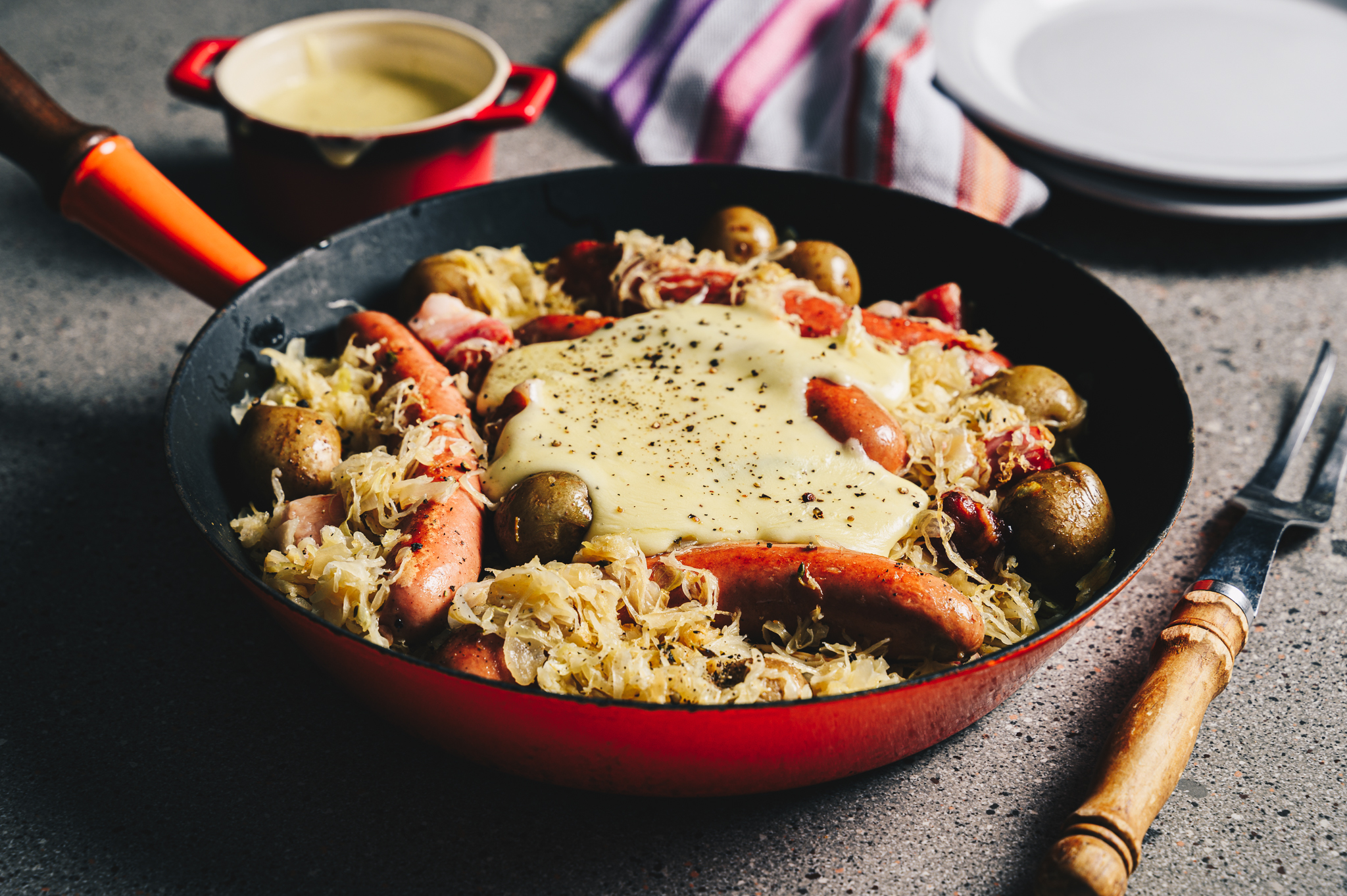
Raclette, more direct and customizable, is served with potatoes, charcuterie or grilled vegetables. Its richness is balanced by pickles and marinated onions, whose acidity brightens every bite.
Fondue is more deeply rooted in Québec culture; raclette is gaining ground thanks to its playful nature. Two distinct dishes, one shared promise: comfort, togetherness, conviviality, indulgence and happiness made easy.
To learn more, consult the article we dedicated to the full comparison between raclette and fondue.
What to Serve with Cheese Fondue?
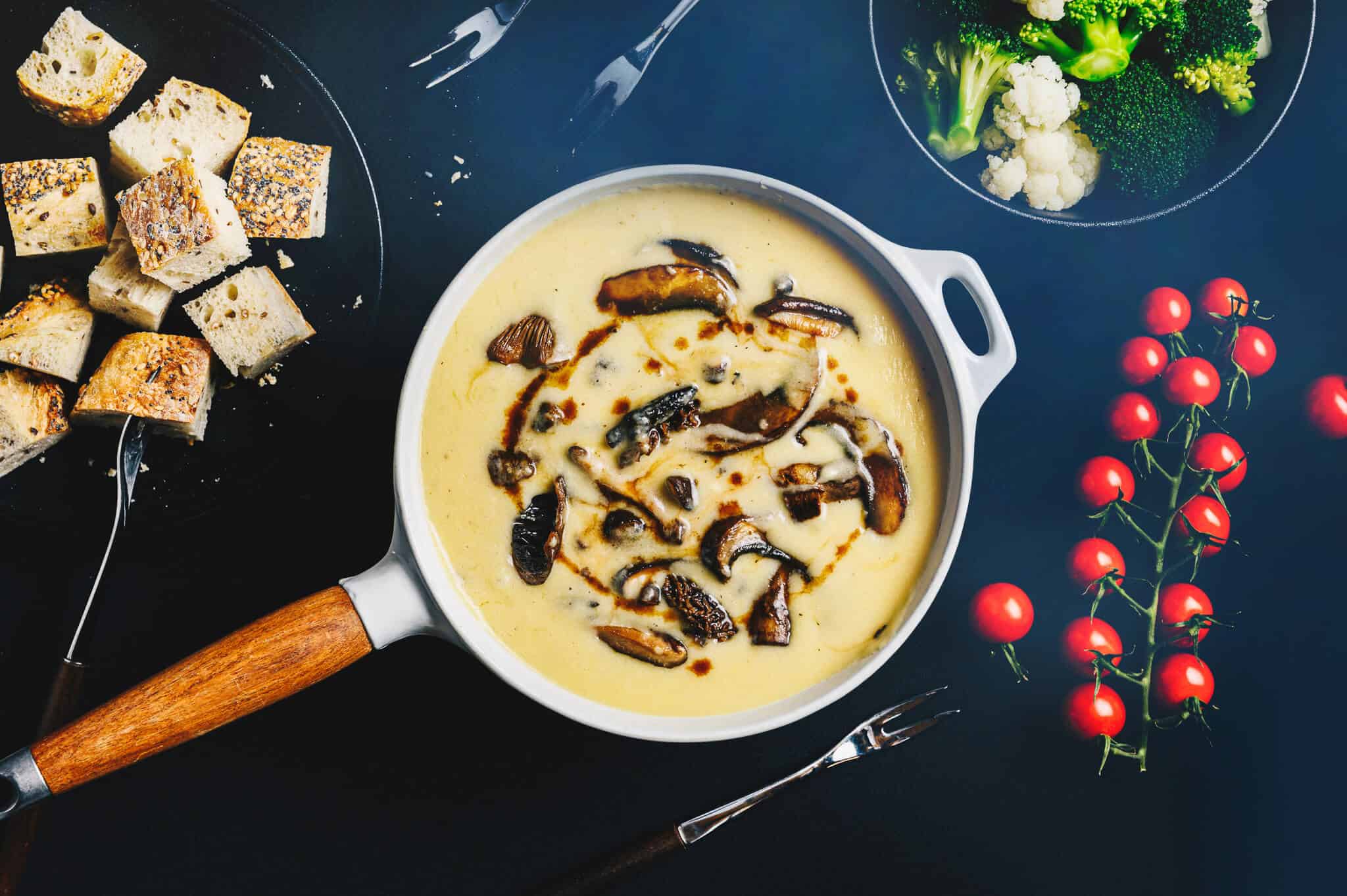
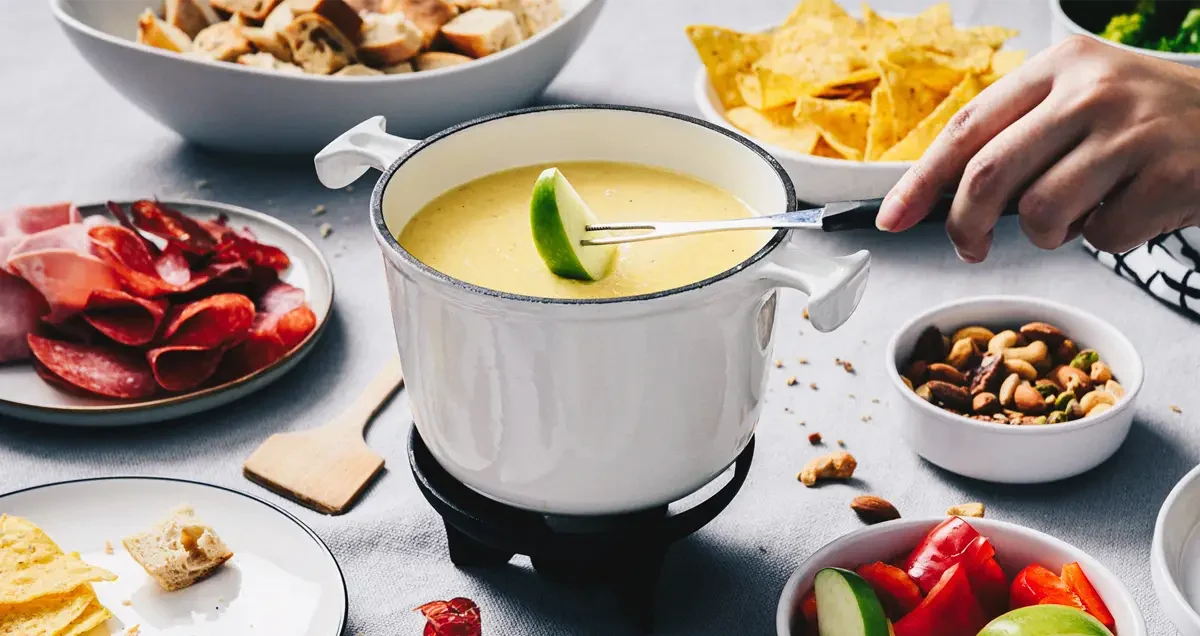
Bread is great — but paired with vegetables, charcuterie, seafood or even fresh fruit, it becomes even better. Choose accompaniments and dippers that contrast in texture and acidity so every bite stays light, balanced and appetizing. Pick ingredients from two or three categories below rather than just one.
- Bread & Bakery: Country loaf, crusty baguette, walnut bread, multigrain bread, pretzels, grilled naan.
- Vegetables & Starches: Baby potatoes, sweet potato, broccoli, cauliflower, fiddleheads, radishes, sautéed mushrooms, grilled asparagus, cherry or sundried tomatoes, crunchy carrots.
- Meat, Charcuterie & Cold Cuts: Dry sausage, BBQ sausages, capicollo, lonza, artisanal cured ham, grilled sausages — even leftover Chinese fondue meats for zero waste.
- Seafood & Fish: Shrimp, scallops, crab, lobster, salmon.
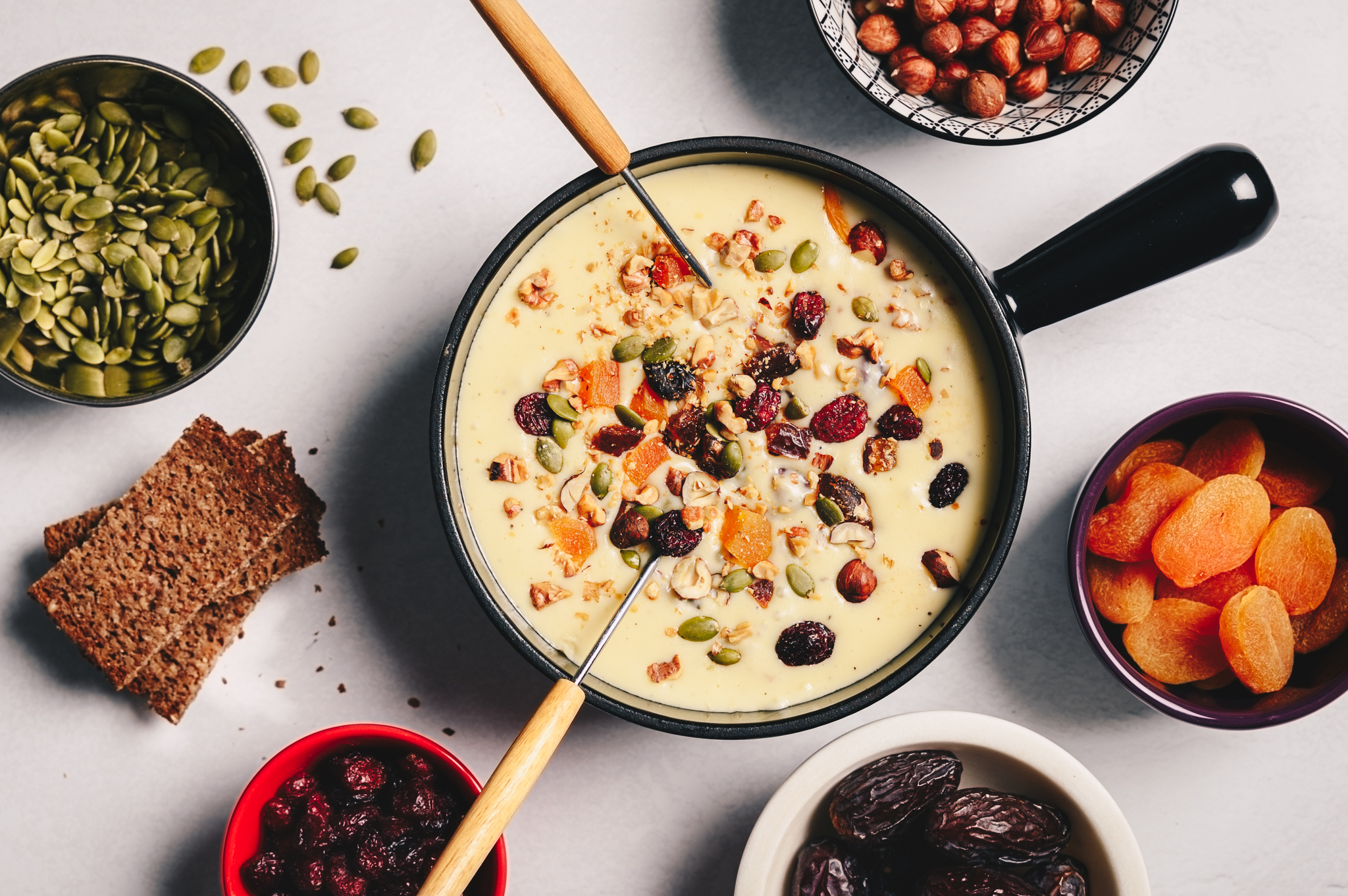
- Fruit: Apples, pears, grapes, strawberries, fresh figs, dried fruits such as apricots and dates.
- To Dip or Drizzle: Roasted mini potatoes, homemade croutons, pan-fried gnocchi, grilled tortillas, nachos.
For preparation ideas, explore our recipes and the ingredients page.
How to Make a Perfect Cheese Fondue? Equipment, Cooking Tips and Expert Tricks
Heat your fondue gently in an enamelled cast-iron fondue pot — the traditional Swiss caquelon — for a smooth, silky texture that never sticks.
You’ll need: a fondue pot, a saucepan, a burner or heating base, fondue forks and a heat-resistant trivet.
The Enamelled Cast-Iron Fondue Pot — for a Fondue That Lasts
It offers even heat distribution, excellent thermal retention and a slow, steady simmer.
It’s also the one that creates the best religieuse.
The Camping Pot — for Last-Minute Fondue
No fondue pot on hand? A simple camping pot works, whether you’re outdoors or improvising at home. The secret: keep the heat low and stir regularly.
The Electric Fondue Pot — for Large Gatherings
It delivers constant heat with precise temperature control. It reduces the risk of burning the cheese and is ideal for big groups.
How to prevent fondue from sticking? Use gentle heat, a thick pot, regular stirring and a moderate flame. Never cook cheese fondue directly in a metal pot — it burns almost instantly.
What Is the Religieuse?
It’s the golden, crispy cheese crust that forms at the bottom of the fondue pot at the end of the meal. To lift it, use a wooden spoon and gently pry it up while the pot is still on the heat — turning off the flame makes the cheese harden. See our dedicated article to learn its history and secrets.
How to clean your fondue pot? Fill it with hot soapy water, let it soak for 20 to 30 minutes, then loosen the residue with a wooden spatula. Ingredients, storage tips and delivery details are all available in our 1001 Questions FAQ.
1001 Fondues Cheese Fondues: Freshness, Local Ingredients and Québec Craftsmanship
Fresh, never precooked. Our fondues are made from fresh cheeses, preserving all their richness and giving the fondue a noticeably smoother, creamier texture.
No food additives, no melting salts, no modified dairy ingredients. Only premium cheeses made from 100% Canadian milk, paired with local artisanal beverages — wine, beer, gin, whisky or cider — and a mastery of the craft refined over decades.
Ready to cook, they require no preparation: no wine to add, no measuring. Simply heat, stir and enjoy, with consistent results every time.
The Chic! cheese fondue line is naturally lactose-free, thanks to the selection of terroir cheeses used and without any additional processing. As for gluten: fondues made with wine or spirits contain none; beer-based fondues may contain gluten depending on the recipe — check the product page or label for details.
Our cheese fondues are Aliments du Québec certified, made with 100% Canadian milk, and proudly carry the Made in Canada designation.
Behind it all lies over 40 years of Québec expertise, and a unique position: in a North American market largely dominated by European brands, 1001 Fondues is the only Canadian company specializing in cheese fondue. Full ingredient details are available on each product’s dedicated page.
The Chic! Fondue Collection and Our Signature Creations
The Chic! Fondue line features seven flavours — all fresh, ready to cook, free of food additives and naturally lactose-free. What sets them apart is the alcohol or cheese that defines each recipe: wine for the most classic and popular version, beer for hoppy notes, gin for floral aromatics, whisky for roasted hazelnut warmth, cider for bright fruitiness, smoke for a gently balanced smoky profile, and goat cheese for fresh, tangy acidity.
Several additional creations are crafted in collaboration with local artisans — cheesemakers, microbreweries, cideries and distilleries — each with its own flavour profile inspired by a region of Québec. These fondues carry the name of the product or place that inspired them rather than the Chic! brand, but they follow the same standards of freshness and composition. Each product page details the cheeses and alcohol used, along with the collaborating artisan.
| Flavour | Profile | Collaborator |
|---|---|---|
| Chic! au vin — wine fondue | Classic and balanced, with no alcoholic aftertaste | Québec wine |
| Chic! à la bière — beer fondue * | Hoppy notes, roundness and character | Léonne Beer — Microbrasserie Le Naufrageur |
| Chic! au gin — gin fondue | Floral and aromatic notes | Gin Violette — Distillerie Mariana |
| Chic! au whisky — whisky fondue | Warm and rounded, with roasted hazelnut notes | St-Laurent 3 grains whisky — Distillerie Arsenal & Co. |
| Chic! au cidre — cider fondue | Fresh, fruity and lightly tangy | Rosé cider — Cidrerie Michel Jodoin |
| Chic! fumée — smoked fondue | Soft, balanced smokiness on a white-wine base | Local Québec cheeses |
| Chic! au fromage de chèvre — goat cheese fondue | Tangy goat-cheese freshness with the creaminess of cow’s milk | Artisanal Québec cheeses |
| Aux 3 fromages de l’Isle | Fruity notes, forest aromas and hints of hazelnut | Fromagerie de l’Isle — Île-aux-Grues |
| Charlevoisienne | The excellence of Charlevoix cheeses | Laiterie Charlevoix |
| Au Génépi | Herbal, floral and lightly fruity notes | Distillerie Menaud & Laiterie Charlevoix |
| Au Louis d’Or | Rich and velvety | Fromagerie du Presbytère |
| À la NEIPA * | Brewed notes, delicate bitterness and freshness | Mountain Bike Beer — Microbrasserie Le Presbytère |
| À la Flacatoune * | Fruity, hoppy aromas | MicroBrasserie Charlevoix |
| À la Rousse Poivrée * | Caramelized and peppery accents | Microbrasserie Ruisseau Noir — Terrebonne |
| À la Triplette de Tadoussac * | Citrus, nuts, toasted bread and a peppery touch | Microbrasserie de Tadoussac |
| À la Léonne * | Versatile, smooth, with citrus notes | Microbrasserie Le Naufrageur & Fromagerie de l’Isle |
| Du Guerrier | Cheese and maple flavours with dune pepper | Épices du Guerrier |
* Fondues marked with an asterisk are made with beer and may contain gluten.
Our Cheese Fondue Recipes
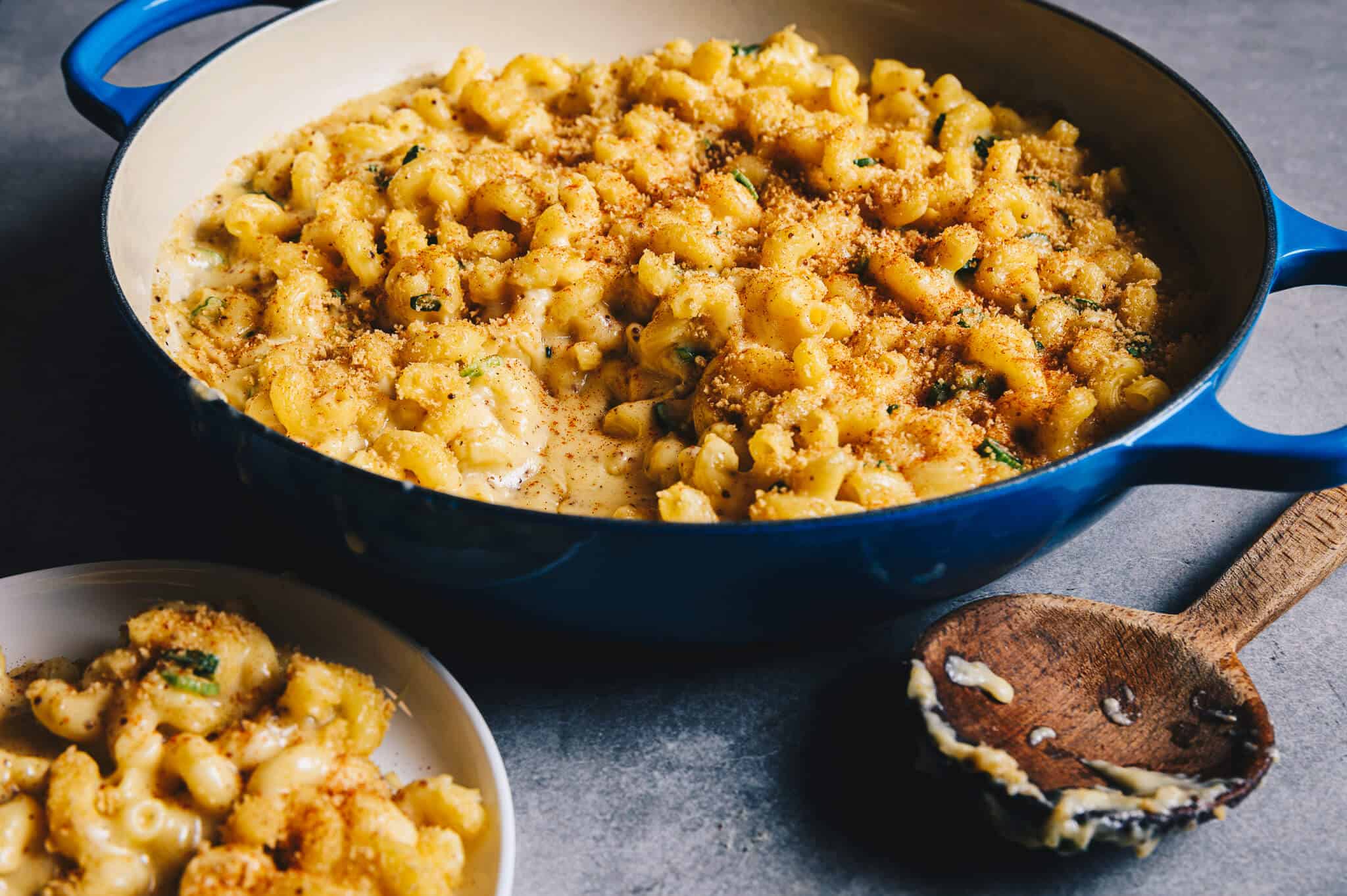
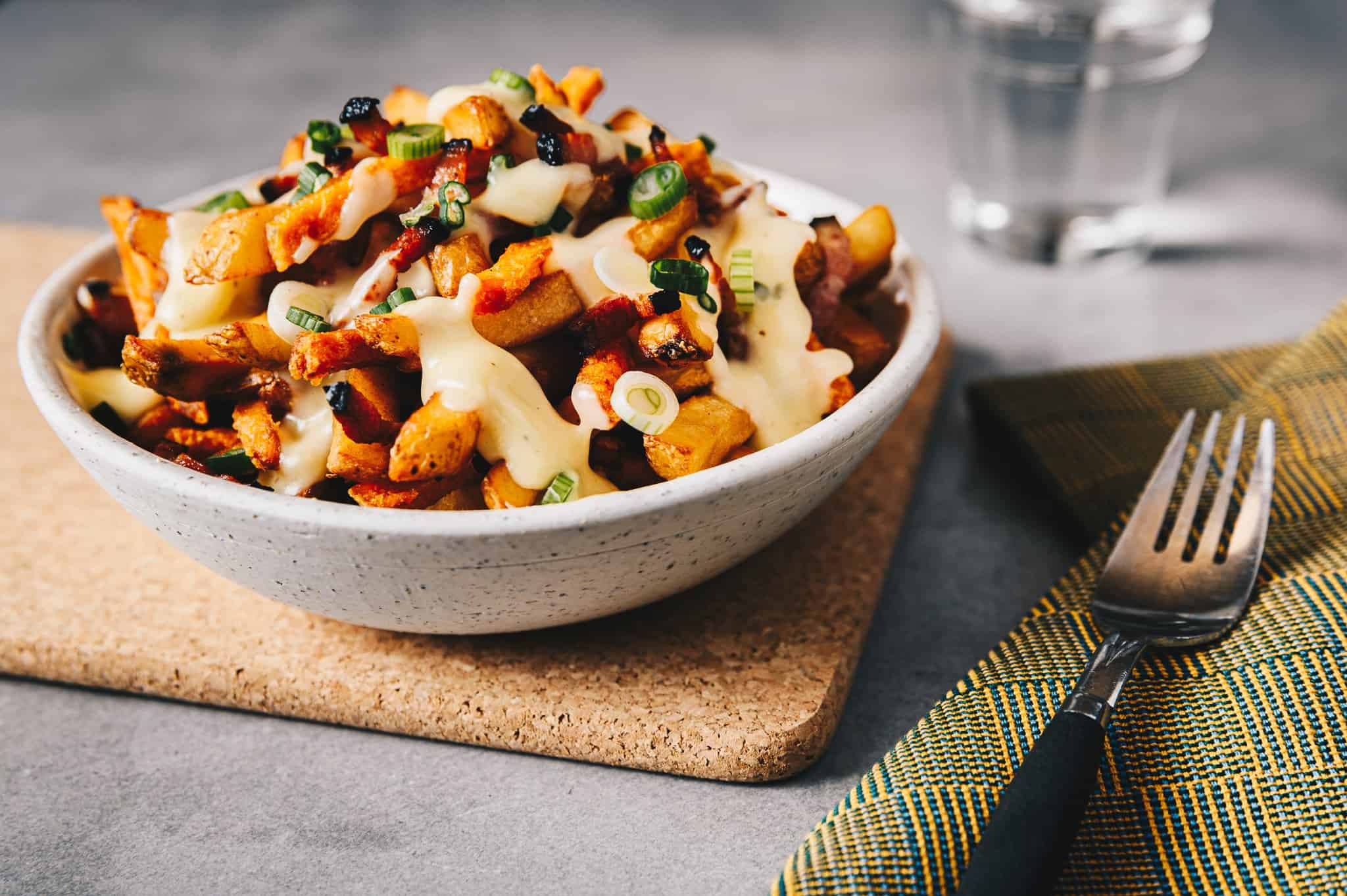
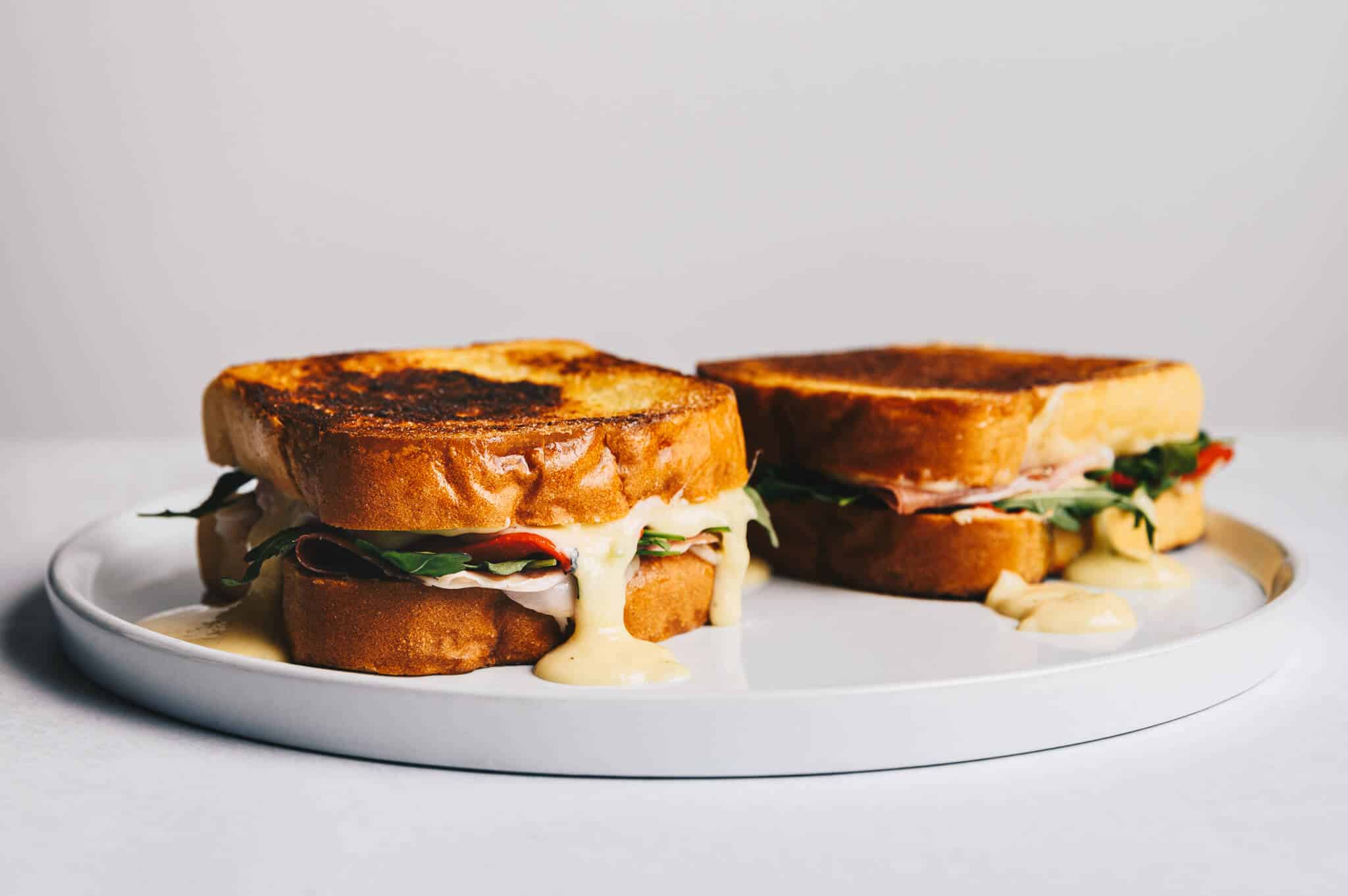
A cheese fondue recipe goes far beyond the fondue pot: fondue also works beautifully as a sauce, a topping or a base for au gratin dishes. Here are six recipes already published on the blog.